
- About Us
- Fertility
- IVF Centre in Bangalore
- IUI Treatment in Bangalore
- ICSI Treatment Centre in Bangalore
- FET Centre in Bangalore
- Colposcopy Center in Bangalore
- Egg freezing Center in Bangalore
- Gynaecologic Oncology
- Hysteroscopy
- Laparoscopy
- PESA
- TESA
- Sperm Freezing
- Ultrasonography
- Endometriosis Surgery in Bangalore
- Gynaecology
- Uterine Fibroid Treatment
- Ectopic Pregnancy
- High-Risk Pregnancy
- Laparoscopic Hysterectomy
- Azoospermia
- Dr. Shilpa G B
- Blog
- Contact us


Trying to conceive can be an exciting yet stressful journey for couples. One of the most common questions couples ask is how long it takes to get pregnant during ovulation.
In this article, we will explore the key factors that affect the time it takes for a woman to conceive after ovulation. We will also provide practical tips to help you increase your chances of getting pregnant.
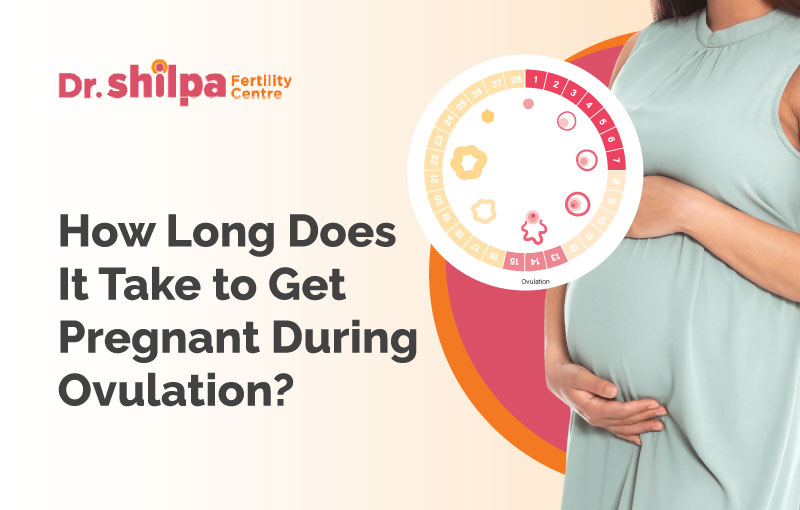
In general, the most fertile time for a woman is during the 5 days leading up to and including ovulation. This is because the egg is only viable for 12-24 hours after ovulation, and sperm can live for up to 5 days inside the woman’s body.
Therefore, if a woman has unprotected sex during this time, she is more likely to become pregnant.
However, it is important to note that there is no guarantee that a woman will become pregnant even if she has unprotected sex during her fertile window. The average couple takes about 6 months to become pregnant, and some couples may take longer.
If a woman has been trying to get pregnant for more than a year without success, she should see a Gynecologist to rule out any underlying fertility problems.
Factors that Affect Conception
Several factors can affect the time it takes for a woman to conceive after ovulation:
- Age: Women’s fertility declines with age due to a decrease in the number and quality of eggs produced. After age 35, the chances of conceiving each month decrease significantly.
- Partner’s Fertility: The male partner’s fertility can also affect conception. Low sperm count, poor motility, and abnormal morphology can make it difficult for sperm to reach and fertilize the egg.
- Overall Health: Stress, weight, and lifestyle habits such as smoking and alcohol consumption can impact fertility in both partners.
Tips for Improving Fertility and Boosting Your Chances of Conception
Here are some tips to improve your fertility and boost your chances of getting pregnant:
- Understand Your Menstrual Cycle: Understanding your menstrual cycle and the timing of ovulation can help you identify the best time to try to conceive.
- Maintain a Healthy Lifestyle: A healthy lifestyle that includes regular exercise, a balanced diet, and stress management can improve fertility.
- Quit Smoking and Limit Alcohol: Smoking can damage eggs and reduce fertility, while alcohol consumption can also harm fertility in both men and women.
- Consider Nutritional Supplements: Certain nutritional supplements such as folic acid, omega-3 fatty acids, and vitamin D can improve fertility and support a healthy pregnancy.
- Seek Medical Help Early: If you have been trying to conceive for over a year, seek medical help from an experienced fertility specialist who can identify any underlying issues and recommend treatment options.
- Have sex regularly during your fertile window: This will increase your chances of sperm being present when the egg is released. The ideal time to have sex is 2-3 days before ovulation and on the day of ovulation.
- Avoid using spermicides or lubricants: These products can kill sperm, making it less likely that you will get pregnant.
- Get regular exercise: Exercise can help to improve your overall health and fertility. However, it is important to avoid strenuous exercise in the days leading up to and after ovulation, as this can interfere with ovulation.
- Eat a healthy diet: Eating a healthy diet will help to improve your overall health and fertility. Make sure to eat plenty of fruits, vegetables, and whole grains.
- Reduce stress: Stress can interfere with ovulation and make it more difficult to get pregnant. Find ways to relax and reduce stress in your life, such as yoga, meditation, or spending time in nature.
Following these tips can improve your fertility and increase your chances of achieving a successful pregnancy. Remember, every couple’s journey to parenthood is unique, and our team at
Dr. Shilpa GB IVF and Infertility Clinicis here to provide personalized and compassionate care to help you succeed.
Conclusion
The time it takes to get pregnant during ovulation can vary based on several factors. However, with the right guidance and support, couples struggling to conceive can overcome infertility and achieve their dream of parenthood.
We hope this guide has provided valuable insights into the factors that affect conception and practical tips to increase your chances of getting pregnant.
Get In Touch:
If you struggle to conceive, we invite you to visit Dr. Shilpa G B’s Fertility Clinic in Bangalore. You can reach us at 080560 05959 or visit our clinic at 922, Cubby Tales, 9thcross, 22nd Main Rd, 2nd Phase, J. P. Nagar, Bengaluru, Karnataka 560078 and experience our personalized and compassionate treatments.